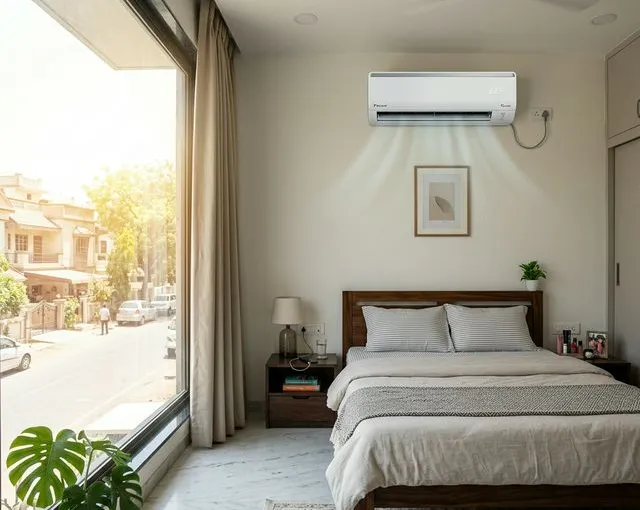
Best 1.5 Ton 5-Star Inverter ACs for Indian Summers (2026)
Best 1.5 Ton 5-Star Inverter ACs for Indian Summers (2026)
India’s air conditioner market is growing at nearly 29% annually, and it’s not hard to see why. Summers are hotter, lasting longer, and the 1.5-ton split inverter AC has become the standard for the Indian bedroom and small to medium living rooms.
But with Indian summers now regularly pushing 40°C+ in May and June, the difference between a well-chosen AC and a poor one is felt in your comfort, your electricity bill, and your long-term repair costs.
This guide focuses specifically on 1.5-ton, 5-star rated inverter ACs — the most bought category in India — and what you should actually care about beyond the star rating.
Note: Prices vary by seller, region, and time of year. Summer months and sale events both impact pricing significantly. Verify the latest price before purchase.
Why Inverter Technology is Non-Negotiable in 2026
A non-inverter AC compressor runs at a fixed speed — it turns on fully when cooling is needed and shuts off completely when the target temperature is reached. An inverter compressor runs continuously but adjusts its speed based on the cooling demand.
Why this matters:
| Factor | Non-Inverter | Inverter |
|---|---|---|
| Electricity savings | Baseline | 30–50% less |
| Compressor wear | High (repeated on/off) | Lower (continuous variable speed) |
| Temperature consistency | Fluctuates ±2–3°C | Stable within ±0.5°C |
| Noise levels | Louder on compressor kicks | Quieter, especially at low load |
| Long-term lifespan | Shorter compressor life | Typically longer |
For anyone using an AC more than 4–5 hours daily, the electricity savings from an inverter model pay back the price premium within 2–3 seasons.
Why Copper Condenser Coils Matter in India
The condenser coil material — copper or aluminium — directly affects durability and maintenance costs in Indian conditions.
Copper vs Aluminium:
| Copper | Aluminium | |
|---|---|---|
| Heat transfer | Better | Adequate |
| Durability in coastal humidity | Much better | Prone to corrosion |
| Repairability | Easily brazed and repaired | Often requires full coil replacement |
| Cost | Higher | Lower |
In Indian coastal cities (Mumbai, Chennai, Kochi, Kolkata) and humid climates, copper coils are strongly recommended. Aluminium coils corrode faster in salt-laden humid air, leading to refrigerant leaks that are expensive to fix.
Even in non-coastal areas, copper coils typically deliver better long-term value despite the higher upfront cost.
Quick Comparison: Best 1.5 Ton 5-Star Inverter ACs (2026)
| Model | ISEER | Copper Coil | Cooling Capacity | Special Feature | Approx Price |
|---|---|---|---|---|---|
| Daikin FTKF50UV16V | 5.20 | Yes | 5000W | 4D airflow | ₹43,000–₹47,000 |
| LG RS-Q18YNZE | 5.20 | Yes | 5100W | AI dual inverter | ₹44,000–₹48,000 |
| Hitachi RSOG518HDEA | 5.00 | Yes | 5200W | Frost wash self-clean | ₹42,000–₹46,000 |
| Panasonic CS/CU-SU18XKYW | 5.10 | Yes | 5200W | NanoeX air purification | ₹46,000–₹51,000 |
| Voltas 185V Vectra Prime | 5.00 | Yes | 5200W | Tata brand, good service | ₹38,000–₹43,000 |
1) Daikin FTKF50UV16V — Best Overall Performance
ISEER: 5.20 | Approx price: ₹43,000–₹47,000
Daikin is the world’s largest AC manufacturer and is consistently the first recommendation from HVAC professionals for Indian conditions. Their 2026 1.5-ton 5-star model continues the tradition of reliable, efficient cooling.
Why it stands out
- 4D airflow: Four-directional air deflection for uniform room cooling without direct cold draughts on occupants
- Copper condenser with Duracoat for coastal and humid environments
- Auto-restart after power failure with memory retention
- PM 0.1 filtration to capture fine dust particles, including PM2.5
- Wide operating voltage range: 150V–264V (no stabilizer needed in most Indian cities)
Energy efficiency:
At 5.20 ISEER, this is among the most efficient 1.5-ton ACs available in India. Estimated annual electricity consumption: approximately 600–650 units versus 900+ for a comparable 3-star non-inverter.
Pros
- Best brand reputation in the professional AC space
- Excellent cooling even at 45°C outdoor temperature
- Minimal maintenance requirements
- Strong nationwide service network
Cons
- Premium pricing
- Annual maintenance contracts (AMC) can be expensive
- Less “smart feature” rich than LG or Panasonic models
Best for: Anyone who wants the most reliable, professionally trusted 1.5-ton inverter AC with minimal maintenance hassle.
2) LG RS-Q18YNZE — Best AI and Smart Features
ISEER: 5.20 | Approx price: ₹44,000–₹48,000
LG’s AI Dual Inverter AC is the most technologically feature-packed option on this list — and it matches Daikin in efficiency while adding smart home integration and AI-driven features.
Why it stands out
- AI Dual Inverter: Two rotary compressors running in sync for more efficient, quieter operation
- ThinQ app: Full voice control via Alexa, Google Assistant, and LG ThinQ
- MonoMesh Filter: Single-layer air filtration for PM 2.5 pollutants
- Low Gas Detection: Alerts you if refrigerant level drops (useful to catch leaks before major damage)
- 4-in-1 cooling modes: Cool, dry, fan-only, heating (cooling-dominant for Indian conditions)
- Operating range: Works efficiently even at 52°C outdoor temperature
Smart home integration:
Pairs with Amazon Echo, Google Home, and LG ThinQ app for full automation. Set schedules, monitor energy consumption in real time, and control remotely from anywhere.
Pros
- Tied for highest ISEER on this list
- Best smart features and app integration
- Low gas alert is a genuinely valuable feature
- Wide service availability across India
Cons
- Higher price than Voltas and Hitachi
- AI features require reliable Wi-Fi
- Some users report the ThinQ app has intermittent connectivity issues
Best for: Tech-forward households who want smart home integration and are willing to pay premium for AI-driven efficiency.
3) Hitachi RSOG518HDEA — Best for Self-Maintenance
ISEER: 5.00 | Approx price: ₹42,000–₹46,000
Hitachi’s Frost Wash self-cleaning technology is the most distinctive feature on this list and one of the most practically useful in Indian conditions. Indian summers mean dusty, polluted air that clogs AC filters fast — Frost Wash automates internal cleaning.
Why it stands out
- Frost Wash: Ice forms on the indoor coil during self-clean mode, then melts and drains, flushing away dust and mold without manual intervention
- Copper condenser with Hitachi’s gold fin coating for corrosion resistance
- Fan motor air purification with activated carbon filter for odour control
- Powerful cooling start mode for rapid room cooling
- Strong performance in high humidity conditions
Frost Wash in practice:
Dust mites, pollen, and mould in the indoor coil are a significant air quality issue in Indian ACs. Frost Wash runs automatically and reduces how often you need professional cleaning by 40–50%.
Pros
- Most useful self-cleaning technology on this list
- Excellent coil protection for humid and coastal environments
- Quiet indoor unit operation
- Good brand reputation in India for AC reliability
Cons
- ISEER at 5.00 is the lowest on this list
- Smart/app features are limited compared to LG or Panasonic
- Higher annual AMC pricing than some competitors
Best for: Buyers who want minimal manual maintenance and live in dusty or humid environments.
4) Panasonic CS/CU-SU18XKYW — Best Air Quality with NanoeX
ISEER: 5.10 | Approx price: ₹46,000–₹51,000
Panasonic’s NanoeX technology makes this AC genuinely unique among the options here — it’s not just cooling the air, it’s actively purifying it in ways standard filters can’t.
Why it stands out
- NanoeX: Generates Hydroxyl radicals that inhibit bacteria, viruses, allergens, and deactivate odours — works even when the AC isn’t in cooling mode (fan-only purification)
- Copper condenser with blue fin anti-erosion coating
- ECONAVI sensor: Detects human presence and solar heat to automatically adjust output for efficiency
- Wide operating range: Works down to -10°C outdoor temperature (useful for North Indian winters with reverse-cycle heating)
- Miraie app control with Alexa and Google Assistant support
For allergy and asthma sufferers:
NanoeX’s ability to deactivate airborne allergens makes this the most health-focused AC on the list. If any family member has respiratory sensitivities, this feature alone justifies the premium.
Pros
- Best air purification technology in this segment
- ECONAVI smart sensing reduces electricity waste
- Efficient heating mode for North Indian winters
- Strong Panasonic service reliability
Cons
- Most expensive AC on this list
- NanoeX claims are impressive but less independently verified in Indian conditions
- App experience could be more polished
Best for: Health-conscious families, households with allergy sufferers, and buyers who want their AC to actively improve air quality beyond just cooling.
5) Voltas 185V Vectra Prime — Best Value Indian Brand
ISEER: 5.00 | Approx price: ₹38,000–₹43,000
Voltas is India’s most popular AC brand by market share — and with good reason. As a Tata brand, it comes with one of the most extensive service networks in the country, and the 185V Vectra Prime is their competitively priced 5-star entry.
Why it stands out
- Tata brand reliability — widely trusted in both urban and rural India
- Copper condenser for durability
- Most extensive service network of any AC brand in India
- 4-in-1 adjustable modes for flexible cooling control
- Auto-clean function for indoor coil maintenance
- Operating range: 160V–264V without stabilizer
The service advantage:
In Tier-2 and Tier-3 cities, Voltas typically has service centres and spare parts availability that international brands simply cannot match. This single factor makes Voltas the most practical choice for buyers outside major metros.
Pros
- Most affordable 5-star inverter AC on this list
- Best-in-class service availability across India
- Tata brand quality assurance
- Solid cooling performance in Indian summer conditions
Cons
- ISEER at 5.00 vs 5.20 for Daikin and LG (slightly higher electricity cost over years)
- Fewer smart features than LG or Panasonic
- Air purification features are basic
Best for: Value-conscious buyers, smaller cities and towns where service network matters most, and anyone who wants a Tata brand guarantee.
What Size Room Does 1.5 Ton Cover?
| Room Size | Recommended Capacity |
|---|---|
| Up to 120 sq ft | 1 ton |
| 120–170 sq ft | 1.5 ton |
| 170–200 sq ft | 1.5–2 ton |
| 200–250 sq ft | 2 ton |
Note: Adjust for direct sunlight exposure, ceiling height above 10 feet, and number of heat-generating devices (computers, TVs) in the room.
What Does ISEER Actually Mean?
ISEER (Indian Seasonal Energy Efficiency Ratio) is the BEE’s metric for AC efficiency under Indian climate conditions — calculated across a full Indian cooling season, not just peak summer.
A higher ISEER means lower electricity consumption per unit of cooling:
- ISEER 4.00: Equivalent to old 5-star rating
- ISEER 5.00: New 5-star (revised 2026 BEE norms)
- ISEER 5.20: Best-in-class in the 1.5-ton segment
Under 2026 norms, some models previously rated 5-star may now qualify for only 3 or 4 stars. Always check the current label.
FAQs
Which is better: Daikin or LG 1.5-ton inverter AC?
Both match at 5.20 ISEER. Daikin is the professional recommendation for pure reliability and cooling performance. LG wins on smart home features, app integration, and AI-driven efficiency. Choose based on your priority.
Is a copper condenser necessary for all Indian climates?
It’s especially important in coastal and humid cities. In dry inland cities, aluminium condensers perform adequately but copper still offers better long-term durability and easier maintenance.
How much electricity does a 1.5-ton 5-star inverter AC use per month?
For approximately 8 hours/day usage, a 5-star 1.5-ton inverter AC uses roughly 150–200 units per month — significantly less than a 3-star non-inverter model at 250–300 units.
Do inverter ACs need a stabilizer in India?
Most 2026 inverter ACs have built-in voltage protection ranging from 150V–264V. A stabilizer is typically not required for most Indian urban areas. For areas with extreme fluctuations, check the model’s operating voltage range first.
When is the best time to buy an AC in India?
Off-season (October to February) typically offers the best deals — brands and retailers clear stock aggressively. However, waiting for Flipkart/Amazon summer sales (April–May) can also yield 10–15% discounts on the latest models.